
Sunday Hürriyet Interview
İpek İzci - Hürriyet Pazar
Classical music icons Güher and Süher Pekinel were last week honored with Germany’s Order of Merit, awarded to extraordinary individuals who have achieved great success in their fields. The Pekinels say, “It is possible to raise the younger generation as creative individuals whose love for music and taste remain unshaken.”
They were born into a home full of art. Their mother exposed them to Mozart’s short compositions, while their father took them to exhibitions and museums. By the age of four, their mother had already recognized their musical aptitude. They took the conservatory exams—and passed. But at that time, the minimum age to enter the conservatory was five. They immediately began private lessons, personally given by the renowned conservatory director of the era, Ferdi Statzer.

Güher and Süher Pekinel gave their first orchestra concert at the age of nine. Three chairs were stacked to reach the keys, and their feet barely reached the pedals. “After this thrilling stage experience, we felt that music would be a part of us, but we never imagined we would have such a huge career,” they now recall. Today, the Pekinel sisters, among the world’s most respected piano virtuosos, have added another award to their numerous accolades. Using the occasion, we asked them questions that had long intrigued us.
Playing in incredible synchrony without making eye contact… What’s your secret? What do you do differently?
Süher Pekinel: The synthesis of our differences makes the results of our collaborative work stronger and more special. Here, balance and creativity are crucial. One of us may notice or value a detail that the other misses. Also, while looking from different perspectives, being able to create an entirely new shared structure in the same breath… We see this as the privilege of contrasts created by being twins.
So when you say, “We always emphasized our contrasts in our twinhood,” this is what you mean…
Süher Pekinel: Even at a young age, while working with the same teachers as soloists, we never wanted to play the same repertoire because we wanted to create that piece ourselves. After our balance and creativity developed individually, it became evident when we began playing together. Until we were 24, we trained as soloists, fully aware that one day we would play together. Once you develop your own concept, tone, and colors as a soloist, symphonic thinking merges on two pianos. Piano icon Rudolf Serkin once said to us, “You were born for two pianos. I will teach you only as soloists.”
Are there ever pieces where you fail to achieve harmony?
Güher Pekinel: Of course, disagreements arise because we have always strived to be different from each other since childhood and have tried to remain individuals despite our strong bond.
Is this what pushes you forward?
Güher Pekinel: Yes. Professionally and in shared projects, we work together. Still, we individually complete our responsibilities and only inform each other for difficult decisions. For concerts, working alone first to study and internalize all aspects of the piece actually shortens the preparation time when we finally play together. We are not as intertwined as it may appear, and our efforts to develop our different sides keep us playing together today.
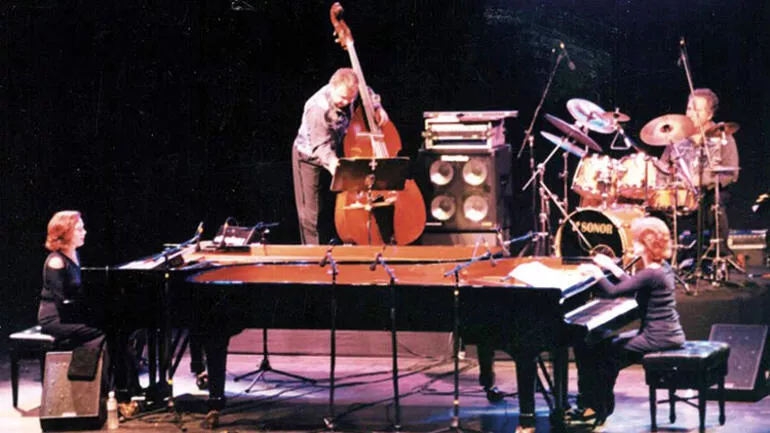
WE BUILD THE BRIDGE OF OUR TELEPATHIC COMMUNICATION BEFORE CONCERTS
You’ve worked with the world’s most respected musicians and shared the stage with the best. How does that feel?
Güher Pekinel: Music, with its scientific and emotional dimensions, is a magical dialogue tool that affects all people equally, regardless of language, race, or generation. We deeply feel the privilege of expressing our artistic stance globally through this tool. The aesthetic sense nurtured by each society reflects the state of music and art back to us like a mirror. Artists representing this shared consciousness carry a great responsibility. Sharing that responsibility with music lovers through our albums is another dimension of it. Our journey is constantly driven by the pursuit of perfection.
Do you have pre-concert rituals?
Süher Pekinel: Before performing, we each turn inward to deepen our musical breath by focusing on emotional intensity. Just before going on stage, we stand back to back and reinforce the bridge of our telepathic communication.
What is the longest you’ve ever gone without playing piano—or could go without?
Süher Pekinel: Working and creating never ends. Music exists beyond the fingers, in our brains, and at every moment in all our cells.
Will classical music die? This has been one of the most debated topics recently. What do you think?
Güher Pekinel: We see that it is possible to raise the younger generation as creative individuals with strong social sharing and unwavering love and taste for music. In Turkey, awareness in families and investment in art has recently accelerated the perception of quality music. Just as the soul cannot be killed, any music that has become a language and identity of the soul cannot be killed either.
Is there a difference between someone who listens to music every day and someone who doesn’t?
Süher Pekinel: Music engages all our senses and directs us to the consciousness and purity of depth, highlighting balance, empathy, tolerance, and sharing. So yes, we believe there is a difference.
Do you listen to the rising trend of rap in recent years?
Güher Pekinel: We follow all kinds of music. While studying at the Curtis Institute of Music in Philadelphia, we had the opportunity to listen to blues, the foundation of rap. We value how cultures translate their collective consciousness into music in different forms. They are telling a story through music. Today, even classical music evolves by taking inspiration from rap, pop, or film music.

WE FEEL DEEPLY UNDERSTOOD WITH THIS AWARD
Does classical music need to change in order to survive?
Süher Pekinel:Modern orchestras have begun giving interactive concerts where the audience experience is prioritized. Rock musicians perform alongside symphony orchestras. Orchestral representations of film music are integrated into the popular culture experience with special clips and costumes.
Do you have a dream related to your career that has not yet been realized?
Süher Pekinel: As George Bernard Shaw said: “Life’s meaning is not in finding yourself but in living by creating yourself.” The constant necessity to reinvent ourselves is the most important force that shapes us and propels our dreams forward.
Last week, you were honored with Germany’s highest-ranking order, the Order of Merit (Bundesverdienstkreuz). What does this award mean to you?
Güher Pekinel: It is an award rarely given in music, and it is reserved for extraordinary individuals who have achieved great success in their fields. We are proud that it was awarded for our career, which strengthens international cultural dialogue, and for the educational systems we have been running for more than 15 years. The recognition and acceptance of our international vision make us feel deeply understood.
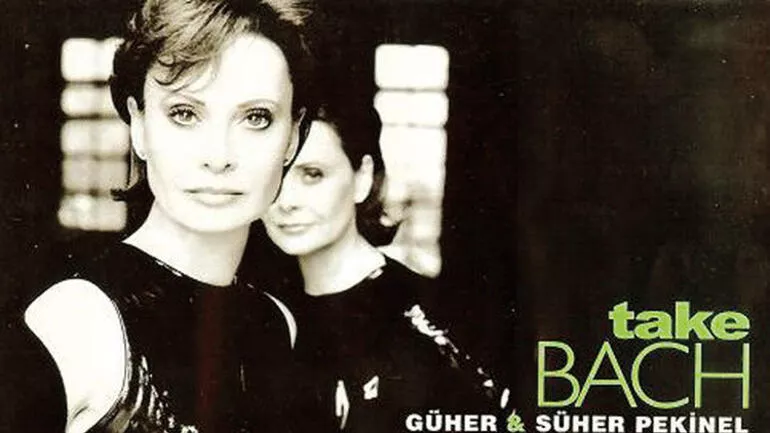
CONSCIOUS CONSUMERS WILL BE DETERMINATIVE FOR THE FUTURE OF MUSIC
The music industry is also facing economic challenges due to the pandemic. What consequences will this have?
Güher Pekinel: Record companies and some orchestras have moved to online platforms, but artists can also upload content individually on social media. How this individualism will affect the music and art industry is a topic of discussion. The process is reshaping stage and performance arts. We believe conscious consumers will be decisive. By valuing carefully and professionally prepared content on social media platforms, they will determine the competitive landscape.
During this period, children and young people whose music education was interrupted also suffered…
Süher Pekinel: History shows that major disruptions and adverse circumstances affect creativity at varying levels across all art disciplines. We are confident that artists who transform this period into production will leave their mark on history with numerous works and interpretations.
Güher Pekinel: We must not fall into despair. Otherwise, we could surrender to our most negative instincts. As always, hope in the darkest times is the true meaning of inner strength.
How does music touch lives? What is the most striking example for you?
Güher Pekinel: Revealing the sense of rhythm within a person through music is important for raising confident, creative individuals with strong problem-solving skills. We have seen the greatest difference in children receiving private education. With instinctive timing and sequences of sounds, they can perform actions that were previously difficult for them with much greater ease.
EDUCATION PROJECTS
The Pekinel sisters have been running three separate education projects for many years. Their Young Musicians on World Stages (DSGM) project is rapidly compensating for lost generations in music education and classical music in Turkey. They ensure that exceptional talents who apply to them continue their education with prominent musicians and music pedagogues. For these young people, they provide living stipends and instruments from the 17th and 18th centuries so they can participate in major international competitions. Turkey has won 17 first prizes in prestigious international competitions. These musicians continue to perform recitals as soloists in the most prestigious concert halls and with the world’s most important orchestras.
Through the Güher-Süher Pekinel Anatolian Carl Orff Education project, 450,000 children in Anatolia have received music education starting from kindergarten. Students at the Pekinel Music Department, which they established in 2007 at the Turkish Education Foundation İnanç Türkeş Private High School—a school for gifted students—graduate from prestigious universities such as Harvard, Columbia, Princeton, and Stanford.